
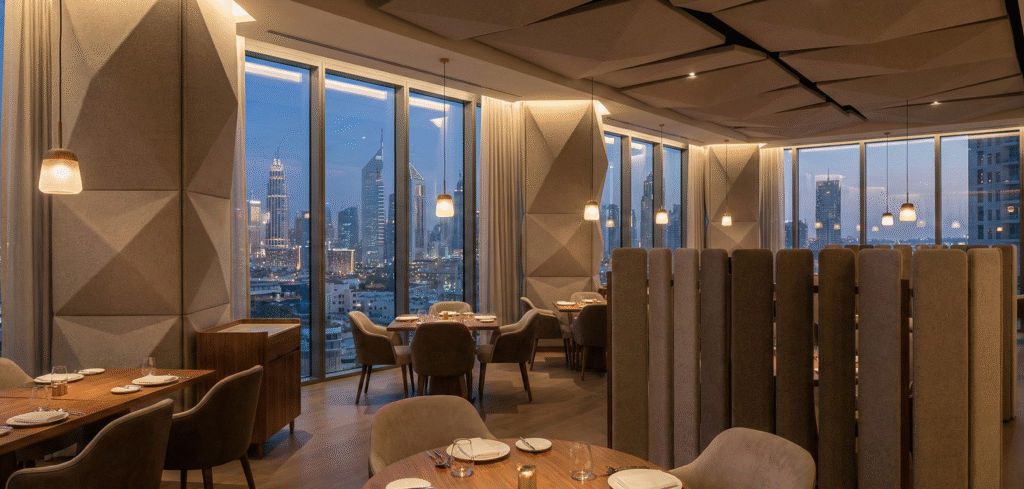
Dubai’s restaurant scene is among the world’s most competitive, where exceptional food must be matched by equally impressive ambiance and dining comfort. Yet many restaurateurs overlook a critical element that can make or break the guest experience: acoustics. Poorly managed sound creates uncomfortable dining environments where conversation becomes exhausting and meals feel rushed. This comprehensive guide explores how acoustic panel Dubai solutions help restaurants achieve the perfect balance between vibrant energy and comfortable sound levels.
Why Restaurant Acoustics Matter More Than Ever
The modern dining experience extends far beyond food quality. Today’s diners—especially in Dubai’s discerning market—expect sophisticated environments where they can converse comfortably, enjoy ambient music at appropriate levels, and experience the restaurant’s intended atmosphere.
Poor acoustics manifest in several problematic ways. Excessive reverberation creates the “cocktail party effect” where patrons must raise voices to be heard, which increases overall noise levels in a self-reinforcing cycle. Speech becomes unintelligible, forcing diners to lean across tables and strain to hear companions. Background music, meant to enhance ambiance, becomes muddy and indistinct.
These acoustic failures translate directly to business impact. Diners spend less time at tables when environments are uncomfortable, reducing revenue per cover. Negative reviews frequently mention noise issues, damaging reputation and deterring potential customers. Staff experience higher stress and fatigue in loud environments, affecting service quality and retention.
Conversely, restaurants with properly managed acoustics create comfortable environments where diners linger longer, order additional courses and beverages, and return more frequently. Positive acoustic experiences generate favorable reviews and word-of-mouth recommendations.
Understanding Restaurant Acoustic Requirements
Effective restaurant acoustics require balancing competing priorities. The space should feel alive and energetic—not sterile or “dead”, while maintaining comfortable sound levels that support conversation.
The key metric is reverberation time, which measures how long sound persists after its source stops. Restaurants typically target 0.8-1.2 seconds, though optimal values vary by concept:
Fine Dining: 0.6-0.9 seconds creates intimate, sophisticated atmospheres where quiet conversation is paramount. Lower reverberation supports the refined experience premium restaurants cultivate.
Casual Dining: 0.8-1.2 seconds balances energy with comfort. These restaurants want lively atmospheres without overwhelming noise that interferes with conversation.
Fast Casual/QSR: 1.0-1.4 seconds maintains energetic environments, encouraging quicker table turns while preventing excessive cacophony.
Bars and Lounges: 1.2-1.6 seconds preserves the energetic, social atmosphere these venues cultivate while preventing sound from becoming completely chaotic.
Strategic Acoustic Panel Placement
Effective acoustic treatment requires strategic panel placement addressing specific sound behavior within restaurant spaces:
Ceiling Applications: The ceiling represents the largest untreated surface in most restaurants and the most effective location for acoustic intervention. Installing acoustic panels across 40-60% of the ceiling area typically provides significant improvement. Suspended baffles, clouds, or direct-mount panels all work effectively, with selection depending on aesthetic preferences and ceiling height.
Wall Treatments: Vertical surfaces, particularly those perpendicular to primary sound sources like kitchens or bars, benefit from acoustic panel treatment. Focus on rear walls opposite sound sources, where sound reflections are strongest, and walls flanking dining areas, where sound bounces between surfaces.
Feature Walls: Strategic placement on feature walls integrates acoustic treatment into design concepts rather than treating it as an afterthought. Acoustic panels in restaurants can incorporate custom colors, patterns, or branded elements, making them design features rather than purely functional additions.
Acoustic Dubai by Akinco specializes in creating customized restaurant acoustic solutions that enhance design vision while delivering measurable sound control.
Material Selection for Restaurant Environments
Restaurant acoustics demand materials meeting specific performance and practical requirements:
Sound Absorption Performance: Select panels with NRC (Noise Reduction Coefficient) ratings of 0.85 or higher. This ensures meaningful acoustic improvement rather than marginal changes that don’t address the problem.
Durability and Cleanability: Restaurant environments expose materials to cooking vapors, humidity, temperature variations, and occasional contact. Choose panels with cleanable surfaces resistant to moisture and staining. Polyester fiber panels excel in these conditions, offering excellent performance with minimal maintenance requirements.
Fire Safety Compliance: UAE building codes mandate specific fire ratings for commercial installations. Verify all acoustic materials carry Class A fire ratings with proper certification documentation. This is non-negotiable for restaurant applications.
Aesthetic Integration: Modern acoustic panel Dubai options offer extensive design flexibility—diverse colors, custom shapes, printed graphics, and various textures. This allows acoustic treatments to reinforce design concepts rather than compromise aesthetic vision.
Design Integration Strategies
The most successful restaurant acoustic projects integrate sound control seamlessly into overall design:
Color and Pattern: Use acoustic panels to introduce accent colors, create visual rhythm, or define zones within open spaces. Panels needn’t be neutral or invisible—bold colors or patterns can enhance design while controlling sound.
Dimensional Variation: Varying panel sizes, thicknesses, or installation depths creates visual interest while addressing acoustics. Three-dimensional arrangements add sculptural quality to ceilings and walls.
Lighting Integration: Backlit acoustic panels, panels integrated with linear lighting, or strategic lighting highlighting panel textures create dramatic effects while controlling sound.
Zoning: Use acoustic treatment to subtly define different zones—bar areas, main dining, private dining—through variations in coverage, color, or installation patterns.
Common Restaurant Acoustic Mistakes to Avoid
Many restaurants compromise acoustic performance through avoidable errors:
Insufficient Coverage: Installing panels across only 10-15% of surfaces provides minimal improvement. Meaningful acoustic control typically requires treating 30-50% of ceiling and wall surfaces.
Wrong Material Selection: Decorative materials that appear sound-absorbing but lack proper acoustic properties waste budget without solving problems. Always verify NRC ratings and acoustic testing data.
Ignoring Low Frequencies: Standard thin panels primarily absorb mid and high frequencies, leaving problematic low-frequency rumble from HVAC, music, or kitchen equipment. Address full frequency spectrum for comprehensive solutions.
Treating Symptoms Rather Than Sources: If kitchen equipment, HVAC systems, or music systems generate excessive noise, address these sources directly rather than relying solely on absorption panels to manage the problem.
Return on Investment for Restaurant Acoustics
Investing in proper acoustic treatment delivers measurable returns:
Increased Dwell Time: Comfortable acoustic environments encourage diners to linger, increasing beverage orders, dessert sales, and overall check averages by 10-20%.
Higher Covers per Service: Better acoustic comfort allows restaurants to maintain fuller capacity without overwhelming noise, increasing revenue per service period.
Improved Online Reputation: Positive acoustic experiences generate better reviews, with noise specifically mentioned as a deciding factor by many diners researching restaurants.
Staff Retention: Comfortable working environments reduce stress and fatigue, improving staff satisfaction and reducing turnover costs.
For Dubai restaurants competing in a sophisticated market, acoustic investment isn’t an optional luxury—it’s a competitive necessity that directly impacts profitability and long-term success.
Frequently Asked Questions
1. How much do restaurant acoustic panels cost in Dubai?
Restaurant acoustic panel costs typically range from AED 150-350 per square meter, including materials and installation. Total project costs for medium-sized restaurants (150-250 sqm) generally fall between AED 25,000-60,000, depending on coverage area, panel type, and customization requirements.
2. Can acoustic panels be installed in existing restaurants without major renovation?
Yes, acoustic panels can be retrofitted into operating restaurants with minimal disruption. Most installations occur during off-hours or closed days. Ceiling-mounted panels typically install in 2-4 days for average-sized restaurants, while wall treatments can often be completed even faster.
3. How do I calculate how many acoustic panels my restaurant needs?
General guidelines suggest treating 40-60% of ceiling area plus 20-30% of wall area for effective sound control. However, specific requirements depend on room dimensions, ceiling height, surface materials, and acoustic goals. Professional acoustic assessment provides accurate specifications for optimal results.
4. Will acoustic panels make my restaurant feel too quiet or sterile?
No, when properly specified. The goal isn’t eliminating all sound but controlling excessive reverberation and bringing sound levels to comfortable ranges. Well-designed restaurant acoustics maintain energy and ambiance while enabling comfortable conversation, the ideal balance for successful dining environments.
5. What maintenance do restaurant acoustic panels require?
Quality acoustic panels require minimal maintenance in restaurant environments. Periodic light cleaning with a vacuum or soft brush removes surface dust. Avoid water or harsh chemicals. Most panels maintain performance and appearance for 10+ years. High-moisture areas near kitchens may benefit from more frequent cleaning.
6. Can acoustic panels be customized to match my restaurant’s branding?
Yes, many acoustic panel types accept custom colors, printed graphics, patterns, or branded elements. This allows acoustic treatment to reinforce design concepts and brand identity rather than appearing as purely functional additions. Customization typically adds 20-35% to base panel costs.