
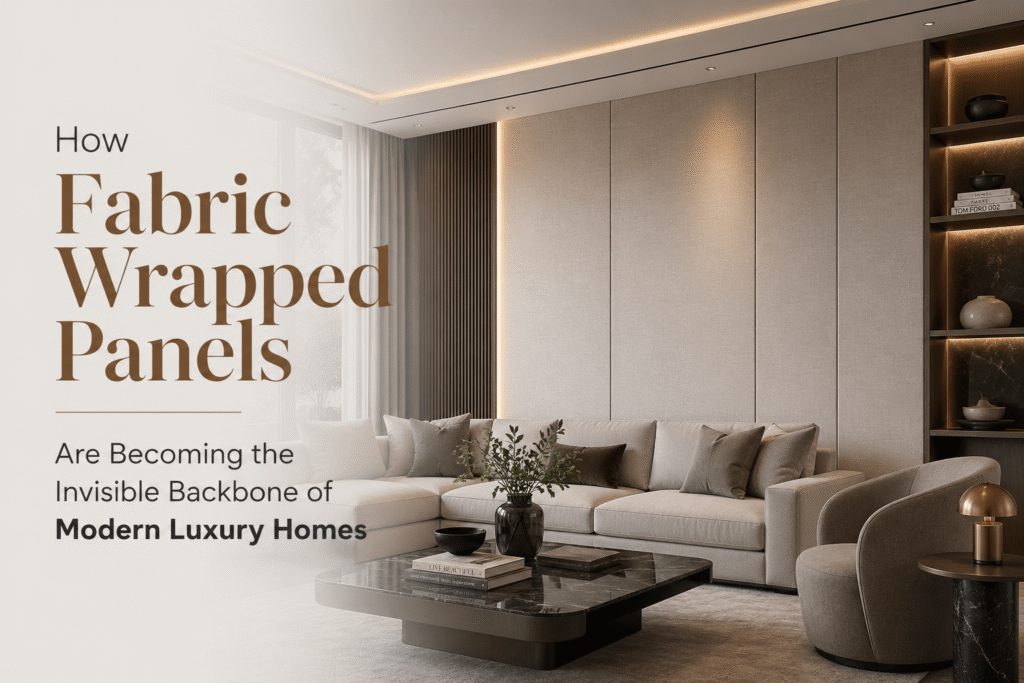
Luxury interiors have always prioritised the visual. Marble floors, statement lighting, and bespoke furniture are the details clients discuss and designers photograph. But something quieter is reshaping the way high end homes are experienced: acoustic fabric panels that disappear into the walls, control the sound environment, and make a space feel as refined as it looks.
In the world’s most thoughtfully designed residences, acoustic fabric panels are no longer an afterthought. They are integral to the architecture, planned from the earliest design stages to solve a problem that no amount of soft furnishing alone can fully address.
The Hidden Acoustic Problem Inside Beautiful Homes
Why Modern Luxury Interiors Are Acoustically Unforgiving
Contemporary luxury homes share a set of design signatures: soaring ceilings, open plan living areas, floor to ceiling glazing, polished stone surfaces, and minimal soft furnishings. Every one of these features is visually compelling. Every one of them is acoustically problematic.
Hard, reflective surfaces bounce sound waves in all directions. In a room with stone floors, glass walls, and a six metre ceiling, a single conversation generates multiple reflections that arrive at the listener’s ears milliseconds apart. The result is a long reverberation tail, the kind that makes music sound muddy, speech sound unclear, and the space feel inexplicably tiring to inhabit.
This is the paradox at the centre of modern luxury design: the more refined a home looks, the worse it often sounds.
What Acoustic Fabric Panels Actually Do
Acoustic fabric panels address this problem at the surface level. A typical panel consists of a rigid or semi rigid core material, mineral wool, polyester fibre, or acoustic foam, wrapped in an acoustically transparent fabric. Sound waves pass through the fabric, enter the absorptive core, and are converted into negligible amounts of heat. The reflected energy that would otherwise bounce around the room is eliminated at the source.
The fabric wrapping is what transforms an acoustic panel from an industrial product into a residential one. Chosen correctly, the fabric becomes indistinguishable from any other wall finish, stretching seamlessly across a frame, accepting paint like colour matching, or showcasing a premium textile that enhances the room’s material palette.
How Interior Designers Integrate Acoustic Fabric Panels Without Compromising Aesthetics
Panels That Become the Wall
The most sophisticated acoustic fabric panel installations are the ones you cannot identify as acoustic treatment at all. Designers achieve this through full height stretched fabric systems, continuous fabric membranes tensioned across a concealed aluminium perimeter track. Behind the fabric sits the absorptive core; in front is a perfectly flat, seamless surface that reads as a wall finish.
These systems can be specified in any colour, any weave, and any texture. They accommodate recessed lighting, socket cutouts, and artwork fixings without interrupting the acoustic performance. In a well executed luxury interior, the acoustic treatment and the interior design are the same thing.
Custom Shapes and Architectural Integration
Acoustic fabric panels are no longer limited to flat rectangles on a wall. Modern fabrication techniques allow panels to be produced in custom shapes: arched, hexagonal, curved, or dimensional. Ceiling cloud systems suspend panels at calculated positions to address specific acoustic hotspots without touching the walls at all. In double height living rooms, a combination of wall panels and ceiling clouds can reduce reverberation time from over two seconds to under 0.5 seconds, the range associated with comfortable, intimate conversation.
The Role of Material Selection in High End Installations
In luxury residential projects, the fabric itself carries significant design weight. Specifiers work from palettes that include natural linens, woven wool blends, technical velvets, and performance fabrics rated for both acoustic transparency and durability. The selection process mirrors the approach taken with any premium interior textile, considering light reflectance, tactile quality, colour temperature, and how the material interacts with both natural and artificial light throughout the day.
Spaces in Luxury Homes Where Acoustic Fabric Panels Make the Greatest Difference
Home Cinemas and Media Rooms
In a dedicated screening room, acoustic fabric panels are absolutely necessary. They control early reflections that muddy dialogue, absorb excess reverb that blurs musical scores, and create the controlled listening environment that allows a high specification AV system to perform as intended. Panels are typically positioned at first reflection points on side walls and ceilings, with additional treatment behind the screen and at the rear wall.
Open Plan Living and Kitchen Areas
The open plan kitchen and living space is acoustically one of the most challenging rooms in a contemporary home. Hard surfaces on every elevation, combined with the ambient noise of appliances and HVAC systems, create a reverberant environment that makes conversation exhausting. Acoustic fabric panels integrated into cabinetry panels, ceiling soffits, or fabric wrapped wall sections reduce this background acoustic energy without requiring any visible compromise to the design.
Master Bedrooms and Wellness Spaces
Sleep quality and mental restoration are increasingly central to luxury residential briefs. Acoustic fabric panels in bedrooms suppress the residual noise and reverberation that interrupt sleep and reduce the sense of calm. In dedicated wellness rooms, meditation spaces, and spa bathrooms, acoustic treatment creates the conditions for genuine quietude, something no lighting scheme or material choice alone can deliver.
Why Acoustic Fabric Panels Are Now a Design Standard, Not an Upgrade
The shift in how acoustic fabric panels are specified reflects a broader evolution in what luxury means. Clients who commission high specification homes are increasingly sophisticated about the sensory experience of a space, not just how it looks in photographs, but how it feels to live in day after day.
Acoustic comfort has moved from an optional enhancement to a baseline expectation in residential projects above a certain level. Designers who understand this specify acoustic fabric panels from the concept stage, integrating them into the wall and ceiling systems the way they would any other premium finish.
For clients and designers working at this level, products like Acoustic Dubai by akinco represent the standard of acoustic fabric panel engineering that serious luxury residential projects demand, panels that perform without compromising the integrity of the design around them.
Frequently Asked Questions
What are acoustic fabric panels made of? Acoustic fabric panels consist of an absorptive core, typically mineral wool, polyester fibre, or high density acoustic foam, wrapped in an acoustically transparent fabric. The fabric allows sound waves to pass through to the absorptive core while presenting a finished surface that integrates with the room’s interior design.
Can acoustic fabric panels be used in residential interiors without looking industrial? Yes. When correctly specified and installed, acoustic fabric panels are indistinguishable from standard wall finishes. Stretched fabric systems, custom colour matching, and bespoke shapes allow acoustic treatment to be fully integrated into luxury residential interiors without any visual compromise.
How many acoustic fabric panels does a room need? The quantity depends on the room’s dimensions, surface materials, and target reverberation time. As a general guide, treating 20 to 30 percent of a room’s total surface area with absorptive panels will produce a noticeable improvement in acoustic quality. An acoustic consultant can calculate precise requirements for critical spaces.
Do acoustic fabric panels block sound from entering a room? No. Acoustic fabric panels reduce reverberation and echo within a room by absorbing sound energy. Blocking sound from travelling between rooms requires soundproofing, a separate construction approach involving mass, decoupling, and air sealing within the building fabric itself.
Are acoustic fabric panels suitable for high humidity spaces such as bathrooms? Selected polyester core panels and moisture resistant fabric wraps are suitable for humid environments. Always specify panels with appropriate moisture resistance ratings for bathrooms, spa areas, and any space where humidity levels are elevated.
How are acoustic fabric panels cleaned and maintained? Most acoustic fabric panels can be vacuumed with a soft brush attachment to remove surface dust. Panels wrapped in performance fabrics can typically be spot cleaned with a damp cloth. The panels themselves require no structural maintenance and do not degrade acoustically over time under normal residential conditions.