
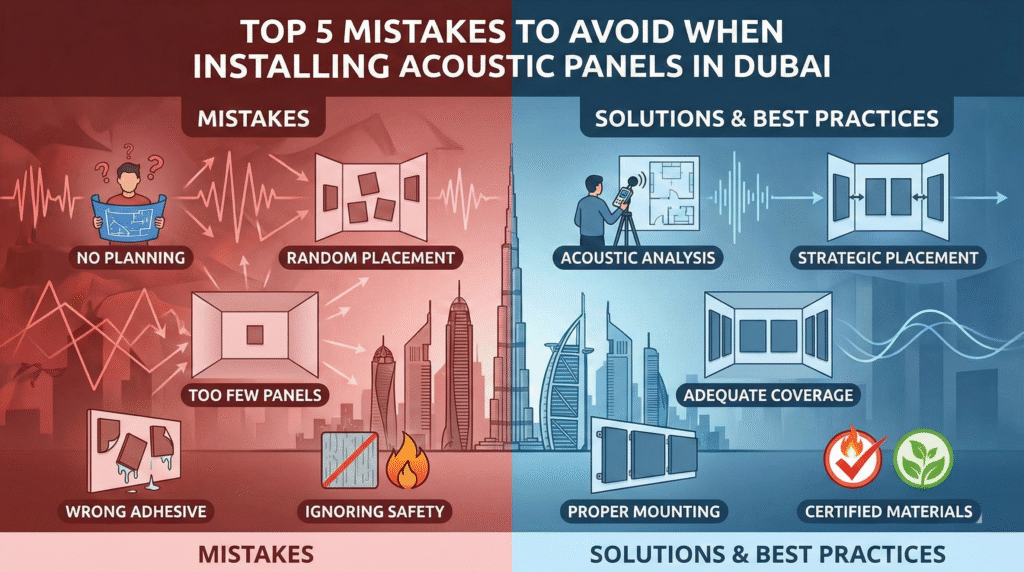
Acoustic panels have become increasingly popular across Dubai’s diverse spaces, from bustling corporate offices in Business Bay to home recording studios in Arabian Ranches. Whether you’re managing a high-energy gym in JLT, designing a peaceful restaurant ambiance in DIFC, or creating the perfect home theater, acoustic treatment plays a crucial role in sound quality and comfort. However, the difference between effective acoustic treatment and wasted investment often comes down to proper installation. Poor installation doesn’t just reduce performance,it can render your panels nearly useless while still costing thousands of dirhams. This guide will help you avoid the most common and costly mistakes when installing acoustic panels in Dubai.
Why Proper Acoustic Panel Installation Matters in Dubai
Dubai presents unique acoustic challenges that make proper installation even more critical than in other cities. The architectural preferences here, soaring ceilings, expansive glass facades, and open-plan designs,create environments where sound bounces endlessly, turning elegant spaces into echo chambers. Mixed-use buildings mean residential units sit above restaurants and beside offices, making noise control not just desirable but essential for compliance with local regulations.
Add to this the constant hum of HVAC systems working overtime in the desert heat and the ambient urban noise from construction and traffic, and you have an acoustic environment that demands thoughtful solutions. The distinction between good acoustics and mere decoration becomes painfully obvious when your expensive panels fail to reduce echo or when conversations remain unintelligible despite wall coverage. Proper installation transforms acoustic panels from decorative elements into functional solutions that genuinely improve your space.
Mistake 1: Choosing the Wrong Type of Acoustic Panel
One of the most fundamental errors is misunderstanding what different panels actually do. Sound absorption and soundproofing are not interchangeable terms, absorption reduces echo and reverberation within a room, while soundproofing blocks sound from traveling between spaces. Foam panels work differently than fabric-wrapped fiberglass panels, which differ from wooden acoustic panels and PET felt panels. Each material has specific absorption coefficients across different frequencies.
A one-size-fits-all approach inevitably fails because every space has unique acoustic properties. Installing thin foam panels in a gym where low-frequency music and equipment noise dominate will prove ineffective, as foam primarily absorbs higher frequencies. Similarly, choosing purely decorative wooden slat panels without proper backing in an office meeting room might look sophisticated but will do little to improve speech intelligibility. Understanding your specific noise problem before selecting panels is essential to achieving actual acoustic improvement.
Mistake 2: Installing Panels in the Wrong Locations
Even the best acoustic panels become ineffective when placed randomly or chosen solely for aesthetic positioning. Many people install panels on whatever wall looks empty or wherever they think it looks good, completely ignoring how sound actually behaves in their space. Sound travels in predictable patterns, reflecting off surfaces at angles equal to its approach, creating specific reflection points that cause problems.
The most commonly missed areas are corners, where bass frequencies accumulate, and ceilings, where much of the problematic reflection occurs in rooms with hard flooring. First reflection points on side walls,where sound bounces before reaching a listener’s ears,critically impact speech clarity and sound quality but are frequently overlooked. Without identifying your primary noise sources and understanding reflection patterns, you’re essentially decorating with expensive materials rather than treating acoustic issues. Strategic placement based on actual sound behavior makes the difference between noticeable improvement and disappointing results.
Mistake 3: Ignoring Room Size, Shape, and Usage
Acoustic treatment isn’t about covering every wall,it’s about achieving the right balance for your specific space and its purpose. Over-treating a room can make it sound dead and unnatural, while under-treating leaves problems unresolved. A small meeting room requires different coverage than a sprawling restaurant, and both differ dramatically from a home theater’s needs.
Room shape significantly impacts requirements too. Rectangular rooms create different reflection patterns than square spaces, while irregular shapes introduce unique challenges. Ceiling height fundamentally changes how sound behaves and how much treatment you need. A gym with six-meter ceilings requires substantially more coverage and different panel positioning than a standard office with 2.7-meter ceilings. Consider your space’s actual use,a restaurant needs to balance liveliness with conversation clarity, while a recording studio requires much more aggressive treatment. Failing to account for these variables results in either wasted money on unnecessary panels or inadequate treatment that fails to solve your problems.
Mistake 4: Poor Installation Methods and Fixing Techniques
Even perfectly chosen panels placed in ideal locations can fail due to improper installation techniques. Using incorrect adhesives for your wall type can result in panels falling within weeks, creating safety hazards and wall damage. Uneven spacing not only looks unprofessional but can create acoustic inconsistencies. Panels that aren’t properly secured may vibrate or rattle, ironically adding noise rather than reducing it.
Common installation errors include using adhesives that don’t bond properly to painted or textured surfaces, failing to distribute weight correctly for heavier panels, and ignoring the manufacturer’s mounting recommendations. These mistakes compromise acoustic performance because gaps between panels and walls reduce effectiveness, and loose panels can’t function as intended. The potential damage to your walls from failed installations often costs more to repair than hiring professional installation would have cost initially. Professional installers understand substrate preparation, appropriate fixing methods for different wall types, and how to ensure panels remain securely positioned long-term.
Mistake 5: Not Considering Dubai Climate and Maintenance
Dubai’s climate poses unique challenges that many overlook when selecting and installing acoustic panels. Extreme heat and humidity, particularly in summer months, can degrade low-quality materials rapidly. Panels that perform well in temperate climates may delaminate, warp, or lose their acoustic properties when exposed to Dubai’s environmental conditions.
Fire safety regulations in Dubai require specific material ratings, particularly in commercial spaces. Using non-compliant materials can result in failed inspections and forced removal. Additionally, Dubai’s dusty environment means panels need regular cleaning, so choosing materials with easy-to-maintain surfaces prevents them from becoming shabby and unhygienic. Long-term maintenance considerations include whether panels can be vacuumed or wiped down without damage and whether their appearance will hold up under regular cleaning. Failing to select climate-appropriate, properly rated, and maintainable materials turns acoustic investment into recurring expenses.
When to Hire an Acoustic Professional in Dubai
While some simple installations can be DIY projects, several signs indicate you need professional help. Complex room shapes, multiple noise sources, strict acoustic requirements, or expensive fit-outs justify professional assessment. Acoustic consultants bring specialized tools to measure reverberation times, identify problem frequencies, and calculate precise treatment requirements.
The cost difference between DIY and professional installation often proves negligible when accounting for mistakes, wasted materials, and suboptimal results. Professionals ensure compliance with Dubai’s building codes, select appropriate materials for the climate, and guarantee proper installation. For commercial spaces where acoustics directly impact business operations or customer experience, professional expertise becomes essential rather than optional.
How Akinco Acoustic Solutions Helps Avoid These Mistakes
Akinco Acoustic Solutions specializes in navigating Dubai’s unique acoustic challenges with customized approaches for every space. Their services begin with comprehensive acoustic assessment to identify specific issues rather than applying generic solutions. With extensive experience across Dubai’s commercial, residential, and hospitality projects, they understand local building standards, climate considerations, and the architectural styles common in the emirate.
Their team provides customized panel selection based on your space’s actual requirements, strategic placement recommendations grounded in acoustic principles, and professional installation that ensures long-term performance. This integrated approach eliminates the guesswork and costly mistakes that plague DIY installations or inexperienced contractors.
Conclusion
Avoiding these five critical mistakes,choosing wrong panel types, poor placement, ignoring room characteristics, improper installation methods, and neglecting climate considerations,separates effective acoustic treatment from wasted investment. Proper planning and installation transform acoustic panels from decorative elements into functional solutions that genuinely improve your space. Rather than prioritizing appearance over performance, focus on achieving actual acoustic improvements that enhance comfort, productivity, and sound quality.
Ready to get your acoustic treatment right the first time? Book a professional acoustic assessment in Dubai with Akinco Acoustic Solutions and experience the difference expert guidance makes.